Coal Sourcing & Quality2026-03-15•6 min read

Coal Grades G1 to G17 Explained: Sourcing & Industrial Selection Guide

A comprehensive technical breakdown of Gross Calorific Value (GCV), ash content, and industrial grade matching for thermal power stations, sponge iron units, and cement kilns across Jharkhand.

VK
Vinay Kumar
Managing Director, RV Enterprises
Coal Grades G1 to G17 Explained: Sourcing & Industrial Selection Guide
Executive Summary & Key Takeaways
  • Gross Calorific Value (GCV) is the primary benchmark determining coal grade classification from G1 (>7000 Kcal/kg) to G17 (2200-2500 Kcal/kg).
  • Thermal power utilities typically optimize combustion efficiency using G10 to G13 non-coking grades to manage boiler slagging and emissions.
  • Sponge iron manufacturers and cement kilns require higher thermal density (G4 to G8) with controlled volatile matter and strict ash thresholds.
  • Direct coalfield linkage in Ramgarh and Damodar Valley ensures certified sampling and batch consistency at the pithead weighbridge.

The Ministry of Coal GCV Band System

In the Indian coal ecosystem, coal classification transitioned from Useful Heat Value (UHV) to the internationally accepted Gross Calorific Value (GCV) system. Under this statutory framework instituted by the Ministry of Coal, non-coking coal is segmented into seventeen precise bands ranging from G1 (highest energy yield) to G17.

For industrial procurement officers and fuel managers, choosing the wrong grade causes major combustion disruptions, elevated specific coal consumption (SCC), boiler tube leakage, and punitive ash disposal overheads.

  • G1 to G3: GCV exceeding 6400 Kcal/kg — premium specialty applications and chemical metallurgy.
  • G4 to G7: GCV between 5200 and 6400 Kcal/kg — ideal for sponge iron rotary kilns and specialized industrial heating.
  • G8 to G11: GCV between 4000 and 5200 Kcal/kg — workhorse grade for cement calcination and modern captive thermal boilers.
  • G12 to G17: GCV between 2200 and 4000 Kcal/kg — high-ash domestic fuel deployed in pulverized fuel (PF) utility power stations.

Sponge Iron vs. Cement: Thermal Requirements

Direct Reduced Iron (DRI) production in rotary kilns demands specific non-coking coal with high reactivity, high Ash Fusion Temperature (AFT > 1150°C), and low volatile matter degradation. Premature clinker formation inside the kiln leads to catastrophic ring accretion, shutting down production for days.

Cement plants, by contrast, can absorb higher ash content since siliceous and aluminous ash blends directly into the clinker matrix. However, consistent moisture levels and uniform particle sizing (0-50mm crushed) remain crucial for stable burner flame aerodynamics.

Pithead Verification & Weighbridge Protocol in Jharkhand

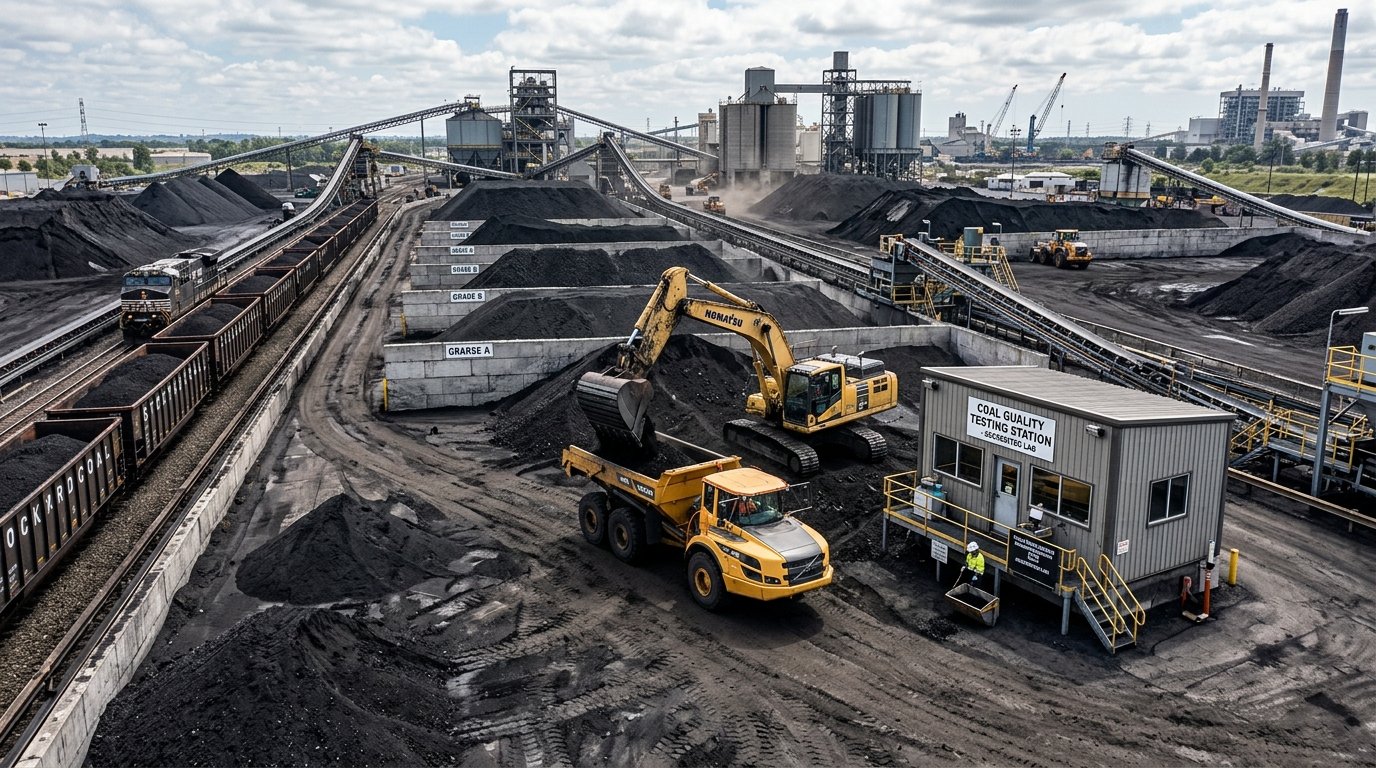
Quality divergence between loading source and discharge siding is the leading cause of billing disputes and calorific deficit. At RV Enterprises, our procurement protocol embeds third-party sampling (CIMFR/SGS benchmarks) directly at the mine stockyard before heavy tipper dispatch.

From our operating base in Karma, Ramgarh, we oversee raw coal sampling, proximate analysis (moisture, volatile matter, fixed carbon, ash percentage), and digital electronic weighbridge gross-tare-net recording to protect buyers from transit degradation.

Filed under topics
#Coal Grades#GCV Testing#Thermal Power#Coal Sourcing#Ramgarh Mining
VK
Vinay Kumar
Managing Director, RV Enterprises

Spearheading industrial coal trading, bulk multi-axle logistics, and site infrastructure operations across Central Coalfields (CCL) and Eastern India from Karma, Ramgarh.